From automation to building with AI
Early conversations about AI in insurance focused on automation – faster processing, lower costs, and standardized outputs. Those benefits remain important, but they do not capture the full impact of what is happening now.
AI has become a tool for building.
Instead of asking how to automate an existing process, individuals can ask how to redesign it. Instead of relying entirely on centralized teams, people closer to the work can prototype, test, and refine solutions themselves – all within company-defined guardrails with strict governance, privacy, and cybersecurity controls. Like my son’s chess game, tasks that once took months can now be completed in weeks or days.
This shift is driving the rise of AI agents. These systems can plan tasks, retrieve information, apply predefined skills, and operate across tools and data sources. Over time, they begin to reflect how specific roles function in practice.
The next logical step may be to develop these agents into AI twins – technological doppelgangers that are infused with our personal and domain expertise, trained based on our workplace experience, and guided by our preferences to, in effect, think, act, and produce output just like us.
These AI twins have the potential to take development, automation, and innovation to another level, creating an extension of their human counterparts – extensions that do not require time off, sick days, or vacations and can magnify the expertise of those from whom they are created.
But what are the limitations and purposes of these AI twins?
What an AI twin represents
An AI twin is not a general-purpose AI that attempts to know or do everything. It is a role-specific agent designed to work the way an individual professional works.
- It understands context.
- It follows established workflows.
- Most importantly, it operates in support of a human decision-maker.
In insurance, that boundary is essential. Judgment, accountability, and explainability remain human responsibilities. AI twins do not change that expectation. They change how much effort it takes to reach the point where judgment can be applied.
By reducing the time spent searching for information, reconciling inputs, and preparing drafts, these systems lower cognitive load on valuable human talent. The benefit is not limited to speed. It shows up in consistency, sustainability, and the ability to focus attention where it matters most while staying firmly within the bounds of privacy and cybersecurity controls.
Why many AI systems fit insurance better than one
A persistent temptation to frame AI adoption around a single, enterprise-wide intelligence layer is understandable. Centralization promises consistency and control.
Insurance, however, has never operated through a single lens. Underwriters, actuaries, claims professionals, and administrators approach problems differently.
- Context matters.
- Experience matters.
- Responsibility is distributed.
Many smaller AI systems, each aligned to a specific role or function, fit that reality more naturally than one monolithic system. They support judgment rather than obscure it. They scale expertise without flattening it.
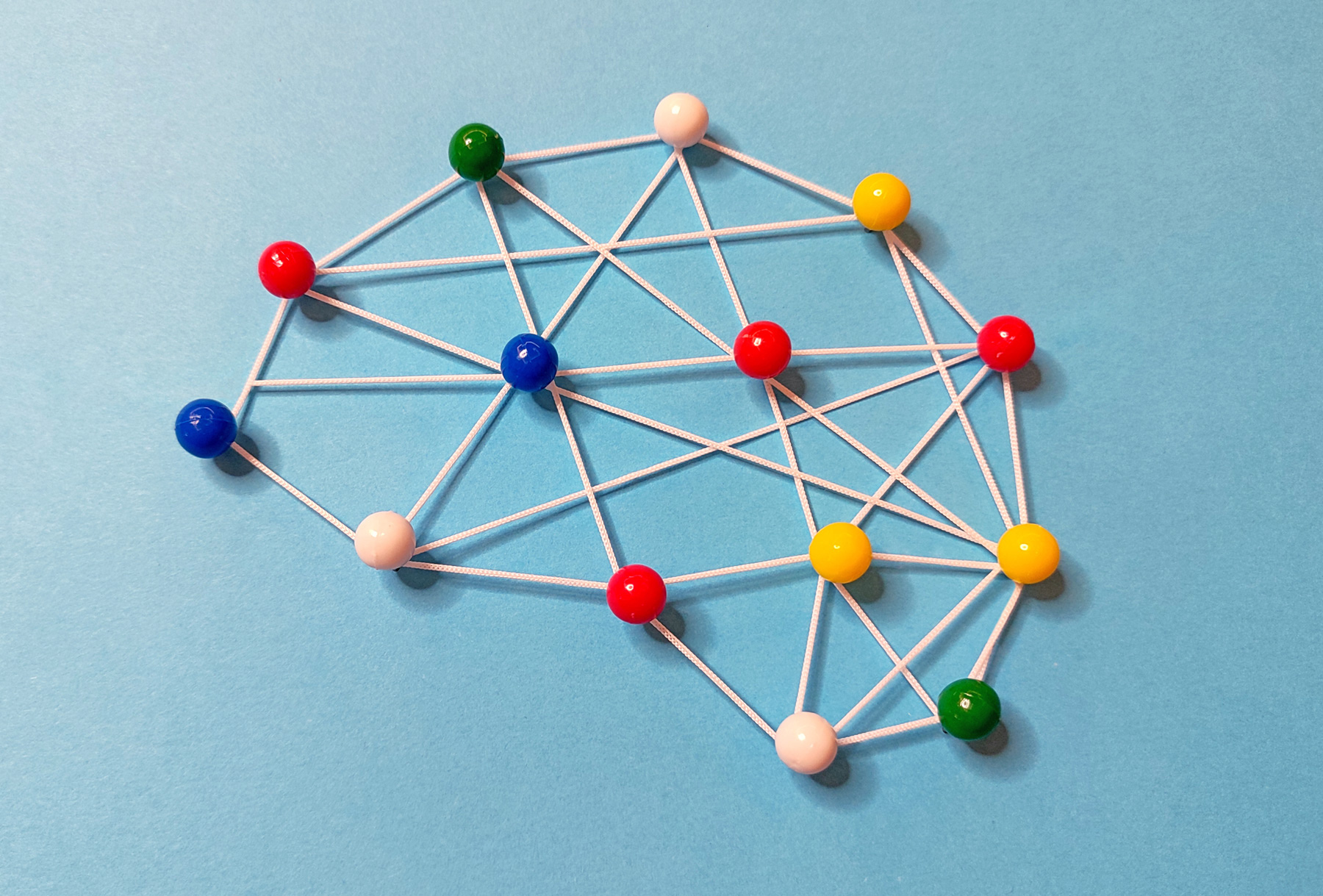
The end goal is something akin to an always-on augmented workforce – extended through AI twins, each with its own specialization and expertise in specific tasks. These AI twins could then potentially work together with other AI twins, much like different teams of humans do, to create expanded output for review by their human counterparts, who remain responsible for maintaining strong governance, privacy, and cybersecurity controls.
Here’s how that could look in action.
AI twins in action: A practical example
Consider a hypothetical underwriting team working with AI twins designed as extensions of individual professionals.
Each underwriter has a role-specific AI twin trained on that person’s workflows, preferences, and areas of expertise. The twin understands how the underwriter approaches risk within the framework and guidelines of the company, what information they typically look for first, how they weigh trade-offs, and how they document decisions.
It does not make final calls. It prepares the ground so judgment can be applied more efficiently.
It also does not approve or decline risks. It organizes, prioritizes, and prepares.
In more complex cases, multiple AI twins can work together. An underwriting AI twin may coordinate with a pricing AI twin to assess how changes in assumptions affect expected outcomes. It may consult a medical or research AI twin that continuously scans new publications and updates internal summaries.
Each AI twin contributes perspective, producing a consolidated view ready for human review.
By the time the underwriter engages, much of the preliminary work is already done.
- Relevant information is assembled.
- Comparisons are laid out.
- Key questions are surfaced clearly.
The underwriter remains accountable for the decision but spends less time on preparation and more time on judgment.
Over time, this kind of ecosystem changes how work flows through the organization. Knowledge does not stall when people are unavailable. Context is preserved. Handoffs become cleaner because AI twins retain continuity. The organization benefits from sustained momentum without asking people to work longer hours or carry more cognitive load.
Importantly, this model does not eliminate the need for human expertise. It depends on it. The value of each AI twin comes from how closely it reflects the professional it supports – a professional deeply versed in the necessary governance, privacy, and cybersecurity controls that define our industry. As roles evolve, the twins evolve with them, reinforcing a system in which people remain firmly in control, supported by AI that works continuously in the background.
Conclusion: Building a more durable path forward
Reminiscing about my abandoned game project, the lesson is not that the idea arrived too early. Rather, it is that ideas often are ahead of the tools needed to turn them into reality.
Those tools now exist to build the future of insurance with AI as a technological doppelganger.
The challenge is no longer whether AI can be used. Instead, it is how deliberately and purposefully it is applied. The goal should not be to remove people from the process. It should be to remove the friction that prevents them from doing their best work – one that requires out-of-the-box thinking, creativity, and human judgment.
AI twins – many AI systems instead of one overarching system – offer a practical way forward. They reflect how insurance work actually happens, respect regulatory, privacy, and cybersecurity practices, and reinforce the role of human judgment.
The future of AI in insurance is unlikely to be defined by a single system that knows everything. It is more likely to be built from many systems, each extending the capabilities of people who remain firmly at the center of the enterprise.
Contact us today to learn more about how RGA uses AI systems to help its partners grow their business.