Medical
  • Articles
  • August 2026

What Hantavirus and Ebola Outbreaks Remind Us About Pandemic Risk

By
  • Dr. Georgiana Willwerth-Pascutiu
  • Richard Russell
Skip to Authors and Experts
Lab technicians examing samples under a microscope
In Brief

Recent outbreaks of hantavirus and Ebola have drawn global attention, not because they are likely to become pandemics, but because they underscore the continuing need for strong surveillance, rapid response, and effective outbreak control when emerging infectious threats arise.

This article was originally published in Insurance Thought Leadership.

Key takeaways

  • Recent outbreaks of hantavirus and Ebola demonstrate that serious infectious disease events can create significant public health challenges without necessarily posing a high risk of becoming global pandemics.
  • Strengthening public health systems and maintaining informed vigilance are essential to managing future infectious disease risks.
  • The next global health threat may emerge from an unexpected source, making sustained investment in preparedness, surveillance, and response capabilities more important than focusing on any single pathogen.


Executive summary

Recent outbreaks of Andes hantavirus and Bundibugyo Ebola have renewed attention on pandemic risk, but neither currently appears likely to cause sustained global spread. Their main significance lies in what they reveal about pandemic preparedness: the importance of rapid detection, effective contact tracing, international coordination, and timely countermeasures.

While disease outbreak severity warrants attention, pandemic potential depends more on efficient human-to-human transmission, pre-symptomatic or respiratory spread, population immunity, and the ability of health systems to respond quickly.

Therefore, these recent outbreaks are best understood not as signals of an imminent pandemic, but as important reminders to remain vigilant, balanced, and guided by the full body of evidence.

The hantavirus outbreak: A local exposure becomes an international public health exercise

The hantavirus outbreak, linked to expedition cruise ship M/V Hondius, illustrates how a rare infection can quickly become a major international containment challenge. In this event, Andes virus infection was first identified more than three weeks after the first death. Epidemiological investigation and viral sequencing suggested that the index patient likely acquired the infection during travel in South America, including areas of Argentina and Chile where the Andes virus is endemic. Because the case was detected in the context of cruise ship travel, passengers and high-risk contacts had already dispersed across multiple countries before the virus was identified.1
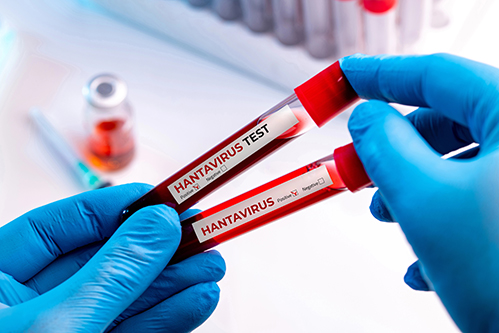
  Hantavirus test 

The cruise ship setting inevitably recalled memories of the early COVID-19 outbreaks at sea, when ships became symbols of uncertainty, containment challenges, and global spread. Biologically, Andes virus is very different from SARS-CoV-2, but the echoes were familiar: delayed recognition, international passenger dispersal, and the need for rapid cross-border coordination.

This does not make Andes hantavirus a likely pandemic pathogen. Its human-to-human transmission remains limited and requires close contact with respiratory secretion. This outbreak resulted in 13 infections and three deaths, yielding an outbreak-specific case fatality rate (CFR) of approximately 23%. The 42-day follow-up period for contact was completed with no additional secondary cases detected, and the World Health Organization (WHO) officially declared the outbreak over on July 2, 2026.

The event illustrates how global mobility can transform a small outbreak into a complex public health operation.2 Even when the biological risk of sustained spread is low, delayed recognition, international travel, and long monitoring periods can place substantial demands on surveillance, communication, and coordination systems.

The Ebola disease outbreak: A reminder that surveillance and rapid detection matter

The significance of the ongoing Bundibugyo ebolavirus outbreak in the Democratic Republic of the Congo, with associated cases and transmission previously reported in Uganda, should not be underestimated. This outbreak is spreading much faster than previous Ebola outbreaks and is now the second-largest on record, with a CFR of approximately 44% as of July 30, 2026.3 The WHO has designated the outbreak a public health emergency of international concern (PHEIC), reflecting both its severity and the need for coordinated international action. Unlike the Andes hantavirus outbreak, however, it highlights a different set of containment challenges: the consequences of limited surveillance, contact tracing, and diagnostic capacity.
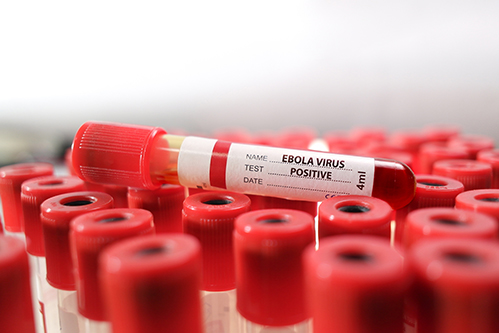
  Ebola virus test 

The outbreak response is further complicated because it is caused by a rare species of Ebola without an approved vaccine and the epicenter is an area affected by conflict. Bundibugyo virus is a less common Ebola virus species, and many existing diagnostic tests, vaccines, and treatment strategies historically have been developed with other Ebola virus types in mind. As a result, the outbreak likely went undetected for months, delaying recognition and response.4

Ebola outbreaks demand urgent attention because of their potential for substantial mortality and capacity to disrupt and overwhelm health systems. But disease severity alone does not determine pandemic potential. Ebola generally spreads through direct contact with infectious bodily fluids and is most contagious once symptoms are present, especially during severe illness. These characteristics make sustained global spread much less likely than with a respiratory virus that transmits efficiently before symptoms develop.

The primary concern is not that Ebola will become the next global pandemic but that outbreaks can expand rapidly when they occur in settings where conflict, humanitarian crises, strained healthcare infrastructure, or gaps in diagnostics, contact tracing, and countermeasures hinder early detection and control.


An adult son and his father.
RGA is the industry leader in providing biometric risk expertise and insights into human health, behavior, and longevity.

What these outbreaks remind us about pandemic risk

Pandemic risk is not driven by a single feature. The greatest risk arises when several factors merge: a novel pathogen, meaningful disease severity, efficient human-to-human transmission, and low population immunity. Transmissibility is especially important. A virus that spreads through respiratory droplets or aerosols, particularly before symptoms appear, is generally more difficult to contain than one that requires close contact after symptom onset.5

This is why the pandemic potential of Ebola and Andes hantavirus remains low in the current context, despite their seriousness.

In contrast, influenza viruses remain a more persistent pandemic concern because they can spread efficiently between people, transmit before symptoms are recognized, and evolve or reassort into new strains. Avian influenza remains a risk to monitor closely, not because it currently spreads efficiently between humans, but because adaptation could change that risk profile.

Recent evidence adds nuance to the avian influenza risk discussion. Windborne spread of H5N1 between poultry farms via virus-contaminated material from infected bird droppings cannot be ruled out, although it remains difficult to prove and does not necessarily imply efficient airborne transmission between humans. Separately, asymptomatic human H5N1 infections6 have been reported, albeit infrequently and often identified through enhanced surveillance or household contact investigations.7 These findings do not change the current assessment that sustained human-to-human transmission remains limited, but they reinforce why avian influenza requires careful surveillance, especially for changes in transmission dynamics.


This comparison highlights why severity alone is not enough to determine pandemic potential.

The recent hantavirus and Ebola outbreaks particularly draw attention to the system-level drivers of pandemic risk, rather than viral characteristics: global connectivity, weak early detection and response, and limited countermeasures.

Global travel can move exposed individuals across borders before an outbreak is recognized. Delays in diagnosis and containment increase uncertainty and response complexity. Limited availability of pathogen-specific tests, vaccines, and treatments increases vulnerability, even when the pathogen itself has limited pandemic potential.

Man rowing in lake
Explore ReFlections, the industry's premier medical underwriting publication, to learn more about key medical issues impacting the insurance industry.

Three key lessons

  1. Travel and ecological change continue to reshape infectious disease risk. Global travel, trade, ecotourism, agricultural expansion, and increasing human contact with wildlife all create more opportunities for zoonotic spillover and cross-border spread. Many spillover events remain dead ends, but repeated opportunities for exposure – sometimes described as viral chatter – give pathogens more chances to adapt.
  2. Pathogen disease severity should not be confused with pandemic potential. A pathogen can be highly lethal but poorly suited for sustained global spread. Conversely, a pathogen with a lower CFR but efficient respiratory transmission can have far greater population impact. For risk assessment, the key question is not simply “How dangerous is this virus?” but “How easily can it spread, when does transmission occur, and what level of immunity and countermeasures exist?”
  3. Preparedness is shaped by speed. The rate of detection, sequencing, reporting, contact tracing, clinical response, and countermeasure deployment can determine whether a localized outbreak remains contained or becomes a wider crisis. Even when no pandemic emerges, delayed recognition can still cause avoidable morbidity, mortality, operational strain, and public anxiety.

Conclusion: A test of preparedness, not a prelude to a pandemic

The Ebola outbreak in the Democratic Republic of the Congo and Uganda and the recent Andes hantavirus outbreak are serious public health events that deserve close attention. Yet despite their severity, neither currently exhibits the transmission characteristics typically associated with sustained global pandemic spread. While both pathogens can cause severe disease and significant mortality, their epidemiological profiles make widespread worldwide transmission unlikely in the current context.

That does not diminish their importance. These outbreaks are reminders that emerging infectious threats continue to test health systems, surveillance capacity, diagnostic readiness, and international coordination. The key takeaway is one of informed vigilance rather than alarm. Pandemic preparedness is not only about identifying the pathogen most likely to cause the next global crisis but also about strengthening the systems that allow us to detect, interpret, contain, and respond to infectious threats before they escalate.


More Like This...

Meet the Authors & Experts

Dr. Georgiana Willwerth-Pascutiu Professional Headshot
Author
Dr. Georgiana Willwerth-Pascutiu
Vice President and Medical Director, Global Medical
Richard Russell
Author
Richard Russell
Vice President, Biometric Research, Global Research and Development

References

  1. https://www.ecdc.europa.eu/en/infectious-disease-topics/hantavirus-infection/surveillance-and-updates/questions-answers-outbreak
  2. https://www.sciencedirect.com/science/article/pii/S2590170226001822
  3. https://www.who.int/emergencies/disease-outbreak-news/item/2026-DON614
  4. https://www.nejm.org/doi/full/10.1056/NEJMra2607216
  5. https://www.sciencedirect.com/science/article/pii/S1755436523000403
  6. https://www.cidrap.umn.edu/avian-influenza-bird-flu/can-avian-flu-spread-wind-cant-be-ruled-out-experts-say
  7. https://jamanetwork.com/journals/jamanetworkopen/fullarticle/2840680
  8. https://www.who.int/publications/m/item/covid-19-global-risk-assessment--version-10