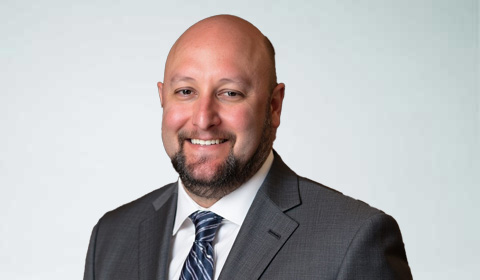
When Machines Spot What We Miss: AI in Mortality Fraud
Speaker
Rohan Chittal, FALU, FLMI, Chief Underwriter, AAA Life Insurance
Key insights
- Human intuition is valuable, but it does not scale.
- AI can identify mortality fraud patterns, but human judgment still determines what they mean.
- Like Galileo’s telescope reshaping our understanding of the universe, new tools reshape our understanding of fraud. What we think of as complete knowledge is never complete.
Top action item
Embrace AI as a new “sense” for fraud detection to challenge what we think we know and to uncover patterns we may not be able to see. Apply human experience and judgment to determine which signs warrant further investigation.
Favorite quote
“What we think is a complete understanding of something is never complete. Every new discovery pushes our reality even further.”
Watch this session
Reframing Fraud: A Strategic Shift Toward Identity-Centric Protection
Speaker
Adam Klutse, Fraud Prevention Director, MassMutual
Key insights
- Identity is the new perimeter. Organizations should focus on the controls and protections surrounding each customer’s identity and move toward identity-centric protection strategies.
- Break down organizational silos. Fraud and cybersecurity teams should work together, sharing information and intelligence. Moving from a reactive approach to a preventive approach requires collaboration.
- Fraud is a strategic business issue. Fraud prevention should be discussed at executive leadership and board levels. Organizations should establish meaningful metrics and invest to protect financial results and corporate reputation.
Top action items
- Start with identity and build governance, maturity, and controls around identity protection.
- Assess organizational maturity honestly. Coverage and enterprise alignment matter more than any single technology solution.
- Elevate fraud discussions to executive leadership and the boardroom.
- Talk with leadership about moving from reactive fraud management to proactive fraud prevention.
- Use fraud cases and investigations to identify upstream opportunities where controls could prevent future incidents.
Favorite quote
“Machines don’t get bored. They approach situations with the same level of commitment and excitement from the first time to the 1,000th time.”
Watch this session
Beyond the Death Certificate: Detecting Fraud in Foreign Death Claims
Speaker
Erick Soeth, CFE, Vice President of Investigative Services, Diligence International Group, LLC
Key insights
- Foreign death fraud continues to grow. Fraudulent and complex foreign death claims have increased significantly over the past several years, particularly involving claims originating from Mexico, India, and China.
- Death certificates alone are not enough. Approximately 95% of fraudulent foreign death claims include a death certificate issued by a civil registry. However, civil registries generally are not responsible for verifying applicant-provided information.
- Verification is critical. Investigators should question everything when reviewing foreign death claims. Verification and validation of supporting documentation are among the most important steps in the process, especially as AI makes document creation and alteration easier than ever.
Top action item
Develop the knowledge and investigative expertise necessary to identify fraudulent death claims. The experience and investigative discipline discussed during the session can help underwriters, claims professionals, and investigators identify fraud earlier and potentially save their organizations millions of dollars.
Favorite quote
“Synthetic identity fraud in foreign deaths, while complex, is a growing threat that has particular hallmarks to help with identification of bad claims. But, first and foremost, the best way to combat fraudulent death claims is to have never allowed the bad business on the books in the first place at the time of underwriting.”
Watch this session
Trust but Verify: The Underwriter’s Guide to Agent Fraud
Speakers
- Val Munchez-van der Wagt, Chief Underwriter/Principal Consultant, VM Insurance Consulting
- Adria Pierce, Director, Financial Crimes Unit and Agent Oversight, Transamerica
Key insights
- Fraud prevention requires a proactive, enterprise-wide strategy rather than isolated controls. The most effective fraud programs integrate underwriting, claims, SIU, agency, legal, compliance, and sales functions, creating a unified approach to identifying and mitigating fraud risks before losses occur.
- AI is both a fraud enabler and a fraud-fighting tool. Fraudsters are increasingly leveraging AI, synthetic identities, and sophisticated schemes, while insurers are using AI, analytics, dashboards, and consortium data to detect suspicious patterns.
- Critical thinking remains the underwriter’s greatest defense. Despite advances in technology, many fraud cases are uncovered because underwriters recognize signs that automated systems may miss.
Top action items
- Strengthen cross-functional fraud partnerships. Establish regular collaboration among underwriting, claims, SIU, legal, compliance, and distribution teams.
- Evaluate fraud controls throughout the customer lifecycle. Review application, underwriting, policy administration, and claims processes for vulnerabilities.
- Embed fraud expertise early. Involve SIU and fraud specialists when designing new products, underwriting workflows, and digital experiences to prevent vulnerabilities from being built into the process.
Favorite quote
“Fraud resilience must be embedded into organizational culture and strategy, not added as an afterthought.”
Watch this session
Major Fraud Events and What They Teach Us
Speakers
- Joshua Bachrach, Partner, Wilson Elser
- Amanda Staples, SVP, Claims and Absence Products, FINEOS
Key insights
- Look for patterns, not just incidents. Fraud rarely announces itself through a single claim. Looking across multiple data points often reveals a larger story.
- Engage SIU and counsel early. The earlier investigative and legal resources are involved, the greater the opportunity for a defensible outcome.
- Document contemporaneously. Red flags and investigative rationale recorded in real time are more effective than information reconstructed after the fact.
Top action item
Proactively adapt fraud prevention processes. Methods that worked in the past may not be effective against emerging tactics.
Favorite quote
“We all know: Document, document, document. Make sure that you’re appropriately documenting the file so that in the event that we do end up in litigation, we can ensure that all of the information is appropriately captured in the file.
Watch this session
The Early Exit: Unpacking Lapse Behavior with MIB’s In Force Data Vault
Speakers
- Kaitlyn Fleigle, FSA, CERA, Actuary, Strategic Research, RGA
- Julianne Callaway, Vice President and Senior Actuary, Strategic Research, RGA
Key insights
- Fraud often stems from human behaviors that directly affect the cost of insurance. Policy stacking was identified as a significant concern.
- Churning remains a concern and can be driven by agent commission incentives.
- External events, including COVID-19, can influence lapse behavior.
Top action items
- Continue leveraging technology and analytical tools to address fraud-related challenges.
- Strengthen industry collaboration and data-driven decision-making.
- Continue monitoring future lapse trends by duration, product type, face amount, and external conditions.
Favorite quote
“Early policy lapses affect both the cost and experience of insurance, and these behaviors aren’t always easy to identify or clearly motivated. Understanding why policies lapse early is crucial for managing risk and preventing potential fraud.”
Watch this session
From Awareness to Action: Elevating Industry Education Through CLHIA’s Anti-Fraud Program
Speaker
Joanne Bradley, Vice President, Anti-Fraud, Canadian Life and Health Insurance Association (CLHIA)
Key insights
- AI is fundamentally changing the fraud landscape. Fraud is becoming more sophisticated, scalable, and difficult to detect because of AI-enabled tactics. Insurers must evolve their fraud-detection capabilities at the same pace.
- Industry-wide collaboration is essential. CLHIA’s Provider Alert Registry, Data Pooling Program, and Joint Investigation Program demonstrate the value of cross-company intelligence-sharing.
- Education and prevention are as important as investigation and detection. Increasing awareness among consumers, providers, and insurers can reduce fraud, strengthen trust, and minimize financial impacts.
Top action items
- Evaluate participation in collaborative fraud initiatives. Assess how your organization can leverage programs such as data pooling, provider alerts, and joint investigations.
- Increase fraud awareness and education efforts. Ensure employees, distribution partners, and policyholders understand emerging fraud risks, warning signs, and reporting mechanisms.
- Explore opportunities for broader data-sharing and cross-industry collaboration. Support initiatives that enable compliant information-sharing while maintaining privacy and independent decision-making.
Favorite quote
“Fraud has become adaptive and AI enabled, and no single organization can see or stop it alone. Education is what turns the whole industry into a detection network. Shared intelligence is what turns that network into action.”
Watch this session
Insurance Fraud in the Age of AI
Speaker
Jeff Heaton, Vice President, AI Innovation, RGA
Key insights
- AI-produced material often exhibits an unusual level of symmetry and structure, which can indicate that content was AI-generated, rather than created by a human.
- AI can effectively manage conversations with call centers, creating opportunities for account takeover fraud and impersonation.
- Organizations should consider real-time authentication methods such as passcodes, passwords, and code words that AI cannot easily bypass.
Top action items
- Identify a solution where AI can be used in claims fraud prevention techniques.
- Enhance verification processes and promote industry-wide collaboration to effectively detect and prevent AI-generated fraud.
Favorite quote
“The problem is we’re getting a lot of authoritative-looking sources that are just not real. You have to be careful. You will see things literally that are not real, yet it is very believable that they are real.”
Watch this session
Connecting Identity Signals to Strengthen Fraud Defense Across the Insurance Journey
Speaker
Jennifer Kostyrna, Senior Director, Product Management, LexisNexis Risk Solutions
Key insights
- Fraud is constantly evolving, so the approach to fraud mitigation should not remain static.
- Identity is made up of physical, digital, and behavioral identifiers.
- Through identity management, insurers can balance consumer expectations for a seamless experience while protecting their business from fraud and cybercrime.
Top action items
- Identify fraud challenges during the application, point-of-service, and claims stages.
- Recognize the need to create a unified enterprise-wide approach to identity intelligence and fraud mitigation.
Favorite quote
“Fraudsters, they aren’t sitting back and using the same old tactics. They are always innovating, looking for new, better ways to commit their crimes – and we have to keep up.”
Watch this session
Conclusion: Common threads
Fighting fraud is not an impossible mission, and several themes emerged repeatedly throughout the conference to prove that:
- Identity is becoming the foundation of fraud prevention.
- AI is both a powerful fraud-fighting tool and an emerging fraud threat.
- Critical thinking remains indispensable, even as analytics become more sophisticated.
- Fraud detection is most effective when organizations share information and collaborate.
- Documentation, pattern recognition, and early investigation remain fundamental to successful outcomes.
- Education and awareness continue to be among the strongest defenses against fraud.
From synthetic identities to mortality fraud, from lapse behavior to claims investigations, the challenge facing insurers remains remarkably consistent: determining whether the person on the other side of the transaction is who they claim to be.
Contact RGA today to explore your options to up your company’s fraud-fighting efforts.