Key takeaways
- Current AI systems are specialized "one-trick ponies" that require complex programming to work together, but AGI will consolidate these functions into a single, adaptable model.
- AGI is predicted to arrive around 2033 according to crowd-sourced forecasting platforms, but the timeline remains uncertain as technological breakthroughs don't follow fixed schedules.
- The insurance industry should actively monitor AGI development as it promises profound impacts on automated underwriting, actuarial projections, and regulatory compliance.
This article was originally published by the Society of Actuaries.
Just over three years ago, on November 30, 2022, ChatGPT was released, and for many, the era of AI began. The insurance industry has seen what was once the domain of actuaries, data scientists, and software engineers now brought to everyone, even associates who were not traditionally “technical.”
This democratization of advanced analytics and automation has reshaped not only how work is performed but who can participate. The speed of change and innovation seems breakneck, and new terminology describes even more powerful AI on the way: artificial general intelligence (AGI), the next step on the road to superintelligent machines.
AI ubiquity
In late 2025, AI is everywhere and quickly becoming just another part of how we work and make decisions. When we drive to the office, our car likely assists or even drives on its own. Meanwhile, we might receive several instant messages from family and colleagues, which our mobile device’s AI assistant conveniently categorizes and prioritizes. Once we reach the office, AI is there to help.
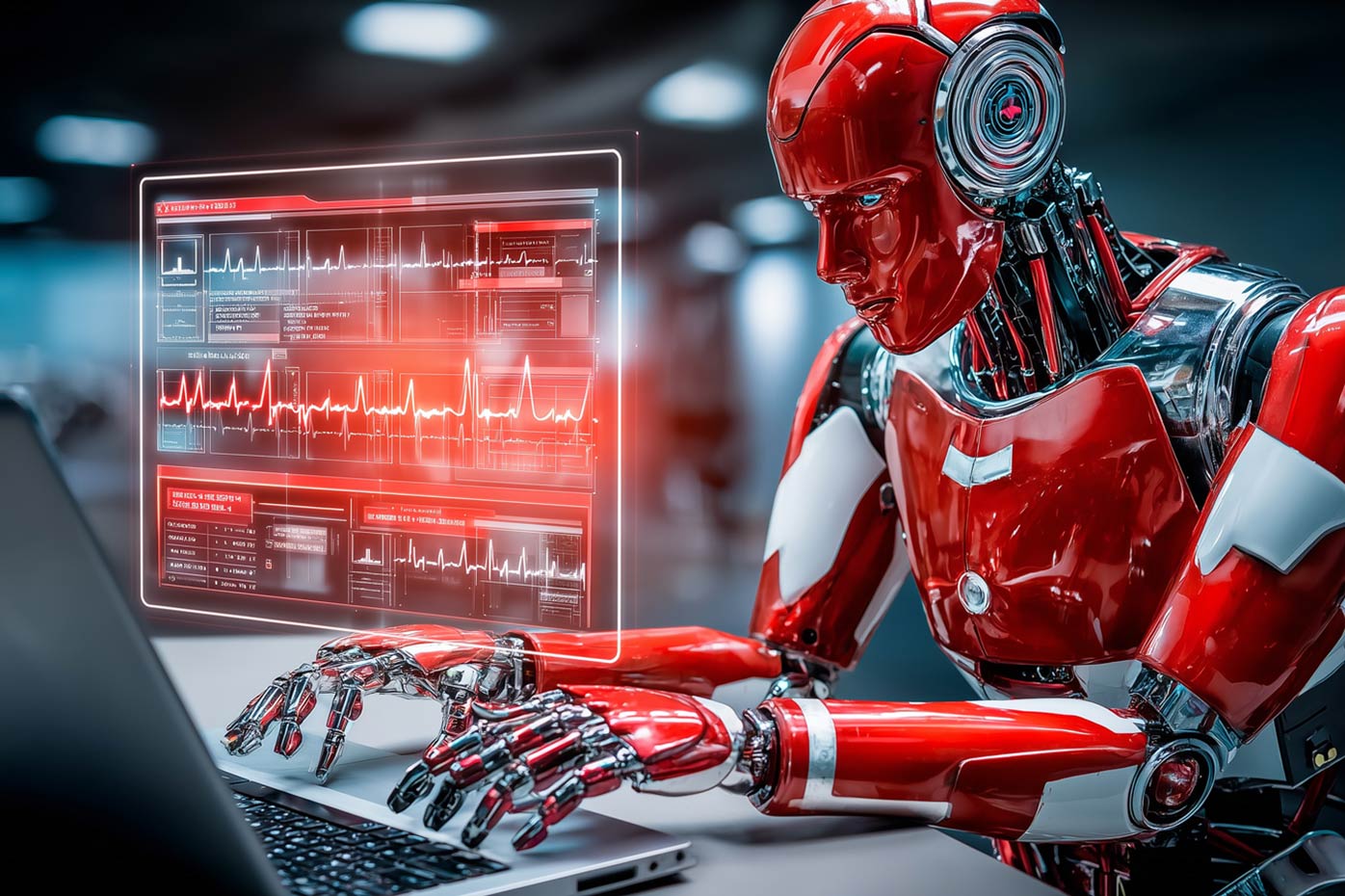
For example, an underwriter might use an AI tool to analyze an EKG in a file and use an email assistant to draft a response for follow-up medical records.
This experience may feel very connected and uniform; however, it is made possible by multiple AI models stitched together using traditional computer programming. This stitching is a big part of agentic AI, which allows users to connect specialized AI models into a single cohesive solution. Agentic AI also allows these models to reach out into the “real world” to carry out tasks, the very definitions of “agency.”
Today’s siloed AI world
Modern AI is made up of models that are essentially “one-trick ponies.” Stable diffusion generates all the fascinating images, for example, while other generative models specialize in video synthesis, text production, speech recognition, and code generation. Separate systems power real-time language translation, self-driving cars, and medical image interpretation. Each excels at a narrow task, but when combined through the “stitching” of agentic AI, they form the broader digital ecosystem we now take for granted.
These models are specialists that currently can communicate only at the most superficial level. Chess playing offers a good example. Machines dominate chess; humans have simply no hope of ever beating even a chess computer running on a mobile device at its top skill level. The book Game Changer walks readers through the unconventional chess strategies discovered by AlphaZero, many of which were so unusual that human grandmasters had never considered them.
But here’s the catch: That book was written by Matthew Sadler and Natasha Regan, both human beings. The most advanced AI chess engines can’t actually write, and we can’t just download their strategies. Writing a book is the domain of LLMs, such as ChatGPT. For its part, ChatGPT plays chess surprisingly poorly and has even been beaten by versions of chess running on very old hardware, such as the Atari 2600. To write that book, the authors had to observe AI playing hundreds of games, much like Jane Goodall learning gorilla behavior through observation in the wild.