A troubling trend
In the years after my diagnosis, two close friends also developed cancer in their mid-30s, one with stage 2 colon cancer, the other with stage 4 breast cancer. What first felt like a deeply personal medical event began to feel like part of something larger. We asked the same question many younger adults are now asking: Why are we getting cancer when we are still so young?
Recent data highlights a rise in various cancers, particularly:
- Colorectal cancer
- Breast cancer
- Thyroid cancer
Experts point to three factors:
- Environmental and early-life exposures – Processed foods, pollution, pesticides
- Lifestyle – Obesity, sedentary habits, alcohol use, chronic inflammation, stress, and shifts in reproductive patterns
- Healthcare and screening – Disparities and inequities in access to care, nutrition, and treatment
What is especially concerning is that some early-onset cancers are more likely to present with aggressive features and poorer prognostic indicators than those diagnosed later in life.
What this means for underwriters
Screening has contributed to increased cancer detection in younger adults for some cancers, but evidence also points to a true rise in disease risk for others, particularly colorectal and certain gastrointestinal cancers. National Cancer Institute researchers found that incidence increased from 2010 through 2019 for 14 cancer types in people younger than age 50, even though overall cancer incidence and overall cancer mortality in that age group did not increase.1
Screening does not function as a clean proxy for individual mortality risk. Eligibility is the first constraint.
For example, under American Cancer Society guidance, average-risk colorectal cancer screening begins at age 45. Many applicants in their 30s and early 40s, therefore, have no routine screening history. In those files, screening absence is not meaningful reassurance. It usually reflects guideline design rather than evidence of low individual risk. Because routine colorectal screening is uncommon at younger ages, a colonoscopy in a younger applicant is more likely to be prompted by symptoms or elevated risk, making it especially important to clarify whether it was performed for cause or due to family history.
This is not a signal to broadly reclassify younger applicants, but it is a signal that longstanding assumptions warrant review. Clinical screening guidelines are designed for population health, while underwriting evaluates individual risk at a specific point in time.
When younger applicants fall outside organized screening pathways, cancers may emerge with fewer historical signals. Normal screening results can reduce uncertainty for a defined period and specific cancer, but they should be treated as time bound, cancer specific data points, not universal reassurance, and they require underwriting rules and evidence strategies to remain aligned with evolving epidemiology.
Dealing with the noise
Incidental findings add another layer of complexity. More screening, more imaging, and more digital records mean underwriters now encounter more small polyps, thyroid nodules, benign breast changes, and borderline lesions. Most of these findings do not translate into immediate mortality risk when clinicians manage them according to accepted standards of care. But they do create classification noise.
The American Thyroid Association (ATA) has highlighted this pattern directly: In a systematic review, it reported “unnecessary” thyroid ultrasound rates of approximately 46% overall – and approximately 34% even when restricted to guideline-based definitions. More recently, the ATA has emphasized that thyroid cancer diagnoses have roughly tripled over the past three decades, with much of the increase driven by detection of small, slow-growing papillary cancers, often set in motion by an ultrasound that identifies a “suspicious” nodule.1
If underwriting overweighs them, decisions become unnecessarily conservative. If underwriting dismisses them entirely, it may miss the smaller subset that signals a more material concern. Consistency depends on clear internal guidance and close alignment between underwriting and medical leadership.
The multi-cancer early detection (MCED) effect
Consumer-driven cancer testing adds a new challenge. Multi-cancer early detection, or MCED, tests are appearing in more files and applicant histories. A positive result does not establish a confirmed cancer diagnosis. A negative result does not eliminate risk.
The underwriting value of MCED is not the test alone. It is what the result triggers and whether that follow‑up is complete.
The simplest standard is to underwrite the workup, not the test. If the follow‑up is pending or unresolved, the case could be held for a result. If the follow‑up is complete and negative, the MCED becomes one data point and must be interpreted alongside symptoms, labs, and other evidence.
This approach prevents both overreaction and false reassurance and keeps decisions aligned between underwriters and medical directors.
How underwriters should respond
For underwriting, the takeaway is clear: No single screening tool, whether traditional or emerging, should be treated as a complete safeguard. Screening can strengthen risk assessment, but it cannot substitute for a full review of clinical context.
Early-onset cancer makes that limitation more important. Younger applicants often fall outside organized screening pathways, and when cancer occurs, it may appear with fewer historical signals in the record. That does not remove the value of age or screening. It means both have to be interpreted with more context and less reliance as standalone reassurance.
For underwriters, actuaries, and medical directors, the implication is practical.
The risk is not that all younger applicants now warrant a different approach. The risk is that selected cancers are rising in younger populations, screening remains uneven by age and access, newer testing introduces nonstandard signals, and streamlined underwriting can act before the full clinical picture is visible.
A durable underwriting framework accounts for those realities and uses screening as it should be used: as a meaningful input, interpreted in context, within a broader and more disciplined view of risk.
Conclusion: My story’s end
In my case, the ultrasound found a very small and very early cancer, and I remain grateful for that. At the same time, the ATA has warned that overuse of thyroid ultrasound can drive overdiagnosis.
That is exactly why underwriters need nuance. A test can save a life in one case and create noise in another. The underwriting task is not to deny either reality. It is to interpret both responsibly.
We have to keep testing our assumptions against what medicine and mortality are showing us now, not what they showed us 20 years ago. We must stay humble enough to recognize when screening reassures us, when it misleads us, and when the truth is still unfolding. That is how underwriting adapts without overreacting. And that is how we protect both mortality performance and the people who trust us with their stories.
Applications are not just words and numbers. They represent real people and families.
My story ends with gratitude. I am cancer-free and grateful to be able to share the journey with others. One of my friends who walked this path alongside me did not have the same outcome. That loss is a constant, quiet reminder that behind every data point is a life and why the work we do truly matters.
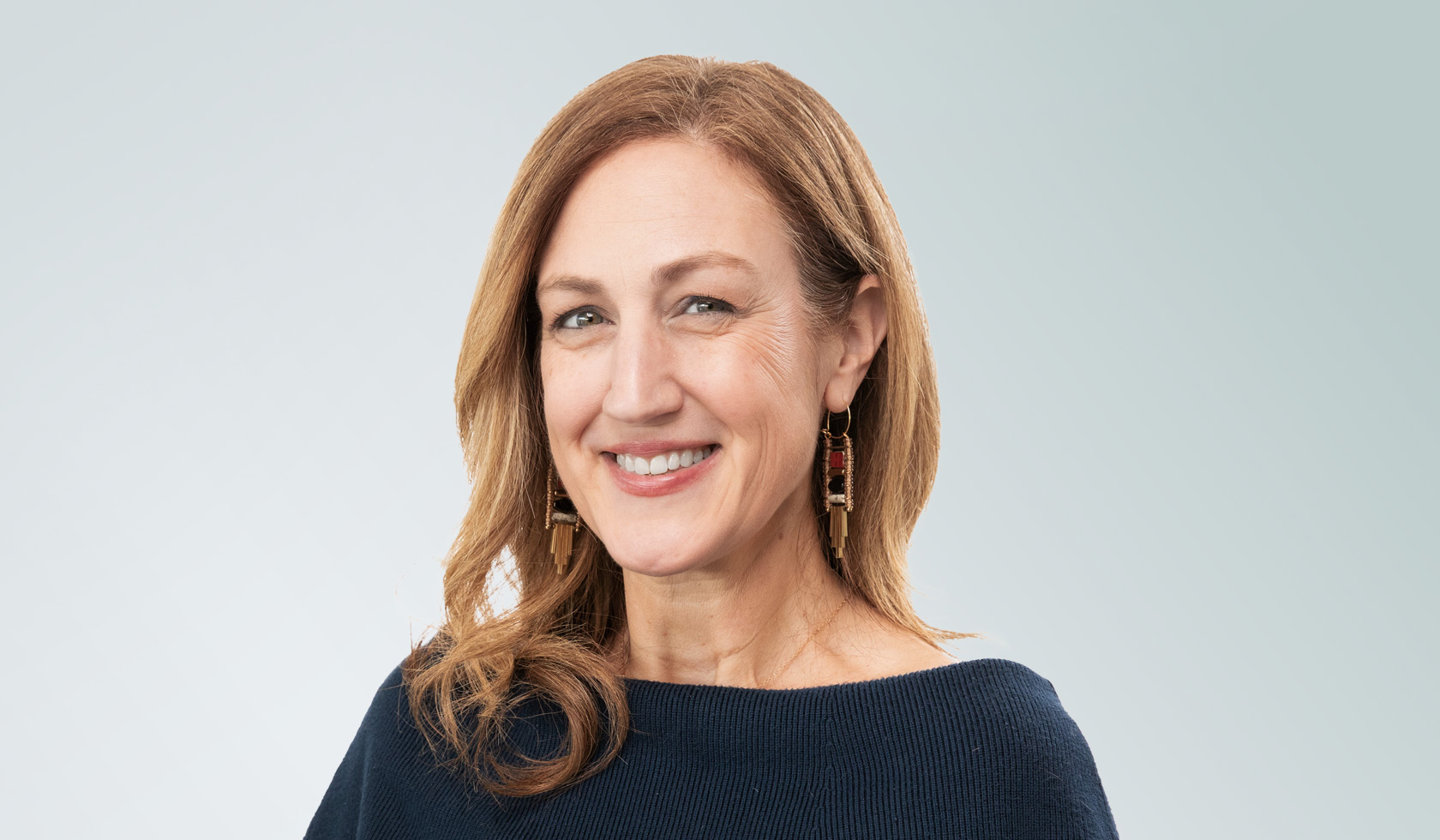
RGA’s Jackie Waas will present on this topic alongside fellow RGA experts Fazilya Abdulkafarova and Dr. Preeti Dalawari, both of whom contributed to this article. Their AHOU Conference 2026 panel discussion – held at 3:30 p.m. Central Time on Tuesday, April 21 – is entitled “The Rising Tide: Early-Onset Cancer and Its Implications for Underwriting.” Learn more about the conference and register today.